Climate inflation is the light on the dashboard telling us our economic vehicle is clapped out. Tim Garrett and Matheus Grasselli suggest some roadside maintenance.
What are the thermodynamic origins of economic inflation? At first hearing, the question sounds absurd. What could concepts like heat, work, efficiency and entropy possibly have to do with prices? Inflation, surely, has to do with central banks, fiscal policy, wage bargaining, and the dynamics of supply and demand.
That conventional story may be true, at least nationally over periods of months to years. In the long-run however we believe that inflationary events are better seen as a clear response to the discovery of energy and material resources, and the destruction of what we have previously produced and still have today.
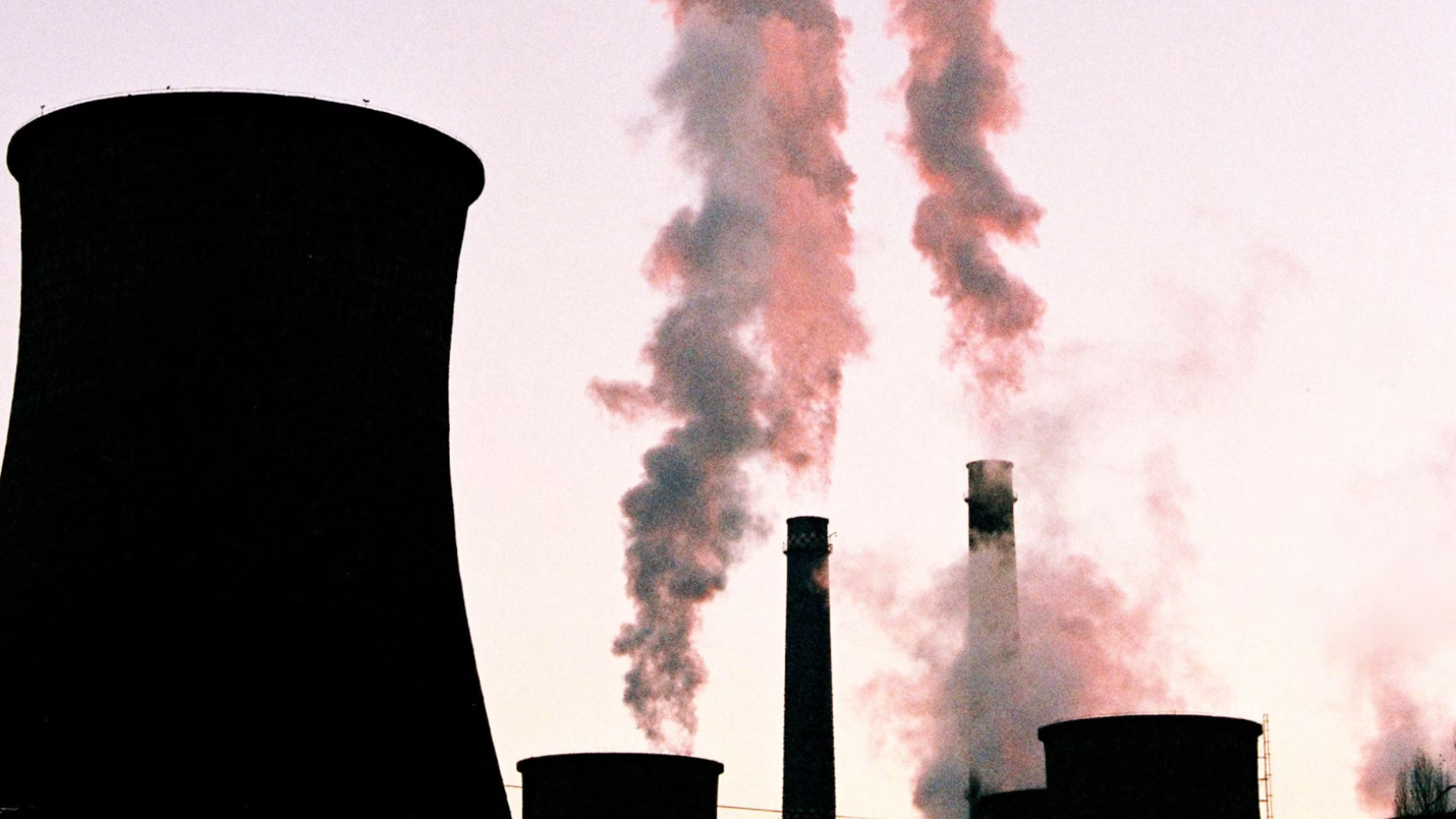
Our desire has been to make economic predictions as they are shaped by the two looming forces of the 21st century: climate change and a mad scramble for remaining fossil fuels and rare earths. There are important lessons from history. Regional climate change has repeatedly set off a pattern of, in sequence, crop failures, inflation, wars, and population declines.
Inflation is what happens when times turn tough, when society has to work harder to sustain preexisting levels of growth.
It was in our exploration of how the economy pollutes the environment and the environment damages the economy that we found that inflation is not simply a question of monetary policy. Instead, inflation is what happens when times turn tough, when society has to work harder to sustain preexisting levels of growth.
Wealth is the thing we have to keep going
Normally, the impacts of climate change on society are expected to become apparent as slower GDP growth relative to some already richer counterfactual. This is what was suggested by prominent economists such as William Nordhaus.
We believe this approach is misguided. No one experiences their present life relative to some hypothetical timeline that never happened. We experience distress when the cost of groceries, insurance, and rents is higher than last year; or when public investments are redirected away from social services to recovering from the emergencies of natural disasters.
Our study began by introducing a new economic concept we term Wealth. Intentionally capitalized, the word differs from the traditional concept of wealth included in economic capital that comprises private fortunes, financial portfolios, and the market value of listed companies. Instead our concept echoes an insight by Thomas Piketty that “…the total value of public and private capital, evaluated in terms of market prices for national accounting purposes, constitutes only a tiny part of what humanity actually values – namely, the part that the community had chosen (rightly or wrongly) to exploit through economic transactions in the marketplace”.
We interpret civilization Wealth to be the broad system of civilization networks that encompasses not only all of physical infrastructure – ports, roads, power stations, and communication networks. It also includes anything that enables the physical infrastructure to work – education systems, language, mathematics, law, software, and culture.
An often overlooked aspect is how long it took to build Wealth, what we call the “long arm of history”. Even deeply ancient inventions like the alphabet or mathematics affect monetary value in the present. Without them the economy would collapse. So we calculate Wealth as inflation-adjusted economic production accumulated for the entire world economy and for all of history. This almost incomprehensible quantity is something that can be calculated from historical data. It is quite large – about ten times larger than the total value of world economic capital normally considered by economists as available to be sold on markets. It amounts to nearly 4,000 trillion dollars.
If we think of the networks of Wealth as a fabric, Wealth grows because current economic output adds by weaving new civilization cloth. But it may also stagnate because output must be redirected instead towards repairing the fraying edges of what already exists. In calm times, fraying is modest compared to the weaving and Wealth booms. In a century of environmental stress and resource depletion, this no longer becomes a guarantee.
Wealth is physically tethered to how much energy the world consumes.
What we showed is that, when a growing share of today’s work is unavailable for extending civilization because it must be used instead to repair then inflation follows.
The thermodynamic forces of inflation
An important aspect of our study that was a recurring theme in our earlier work is that Wealth is physically tethered to how much energy the world consumes. Even as economic production has become steadily more efficient, it has taken 5 watts of power consumption to sustain each one thousand inflation-adjusted dollars of Wealth. From year to year, for over a half century of recently available data, the number varies by just a few percent in either direction.
One implication of this scaling constant is that more energy efficient production enables a larger civilization with a greater appetite, one subject to the same scaling. Civilization may become cleverer, yet still not become lighter.
A related implication is that a larger civilization, one with more Wealth, cannot avoid consuming more energy however efficient it may be: a functioning real economy necessarily adds to future resource consumption demands. There is no escape.
Hyperinflation will be upon us by 2070 if networks fall apart at a rate that increases by just 0.1 per cent in relative terms each year – even if growth of energy resources remains unimpeded.
Conversely, if expansion of global energy use slows due to resource scarcity, nominal activity may continue its capitalist mad scramble for money and contracts, but the risk is of economic collapse. Put simply, the economic engine becomes harder to run.
The inflationary politics of repair
Our model predicts that an economy that is harder to run due to climate change and resource scarcity, one with a widening gap between nominal and real production, is one that will be inflationary. In fact, hyperinflation will be upon us by 2070 if networks fall apart at a rate that increases by just 0.1 per cent in relative terms each year – even if growth of energy resources remains unimpeded. If that acceleration reaches 10 per cent per year, collapse arrives by 2040. The nominal economy may look vigorous on its surface while masking a quietly growing burden of maintenance and repair.
Like bankruptcy, inflation rises gradually then suddenly. As the bill of resource constraints and restricted flows comes due, the difference between nominal and real production accelerates. Our expectation is that stagnation and inflation will become the defining economic feature of the century.
But can this grim reality be avoided? The adverse winds we face may be too strong. But if there is a way out, it will not be by supposing economic fairy tales. We propose that inflation is the thermodynamic warning light for a civilization engine that is in need of repair. The consequences of not fixing the engine, as history teaches us, can be economically and societally explosive.
This is drawn from this academic article: Garrett, T. J. and Grasselli, M. R.: Acceleration by climate change of global economic inflation, EGUsphere [preprint] 2026.